


Celebrating 100 years of Terlouw
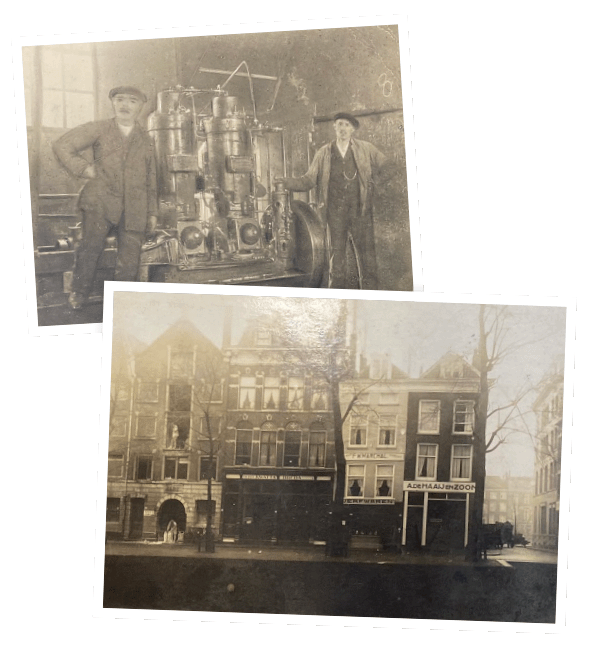
Start business – 1924
On 29 August 1910, Johannes Cornelis Terlouw began his career as an engine
fitter at the engine manufacturer “De Industrie” of Joh. S. Boot in
Alphen aan den Rijn. At the time, he earned 0.20 Dutch guilders per hour.
As more and more vessels were fitted with Industrie engines and Rotterdam
had become the centre of Dutch shipping, J.C. Terlouw decided to establish his
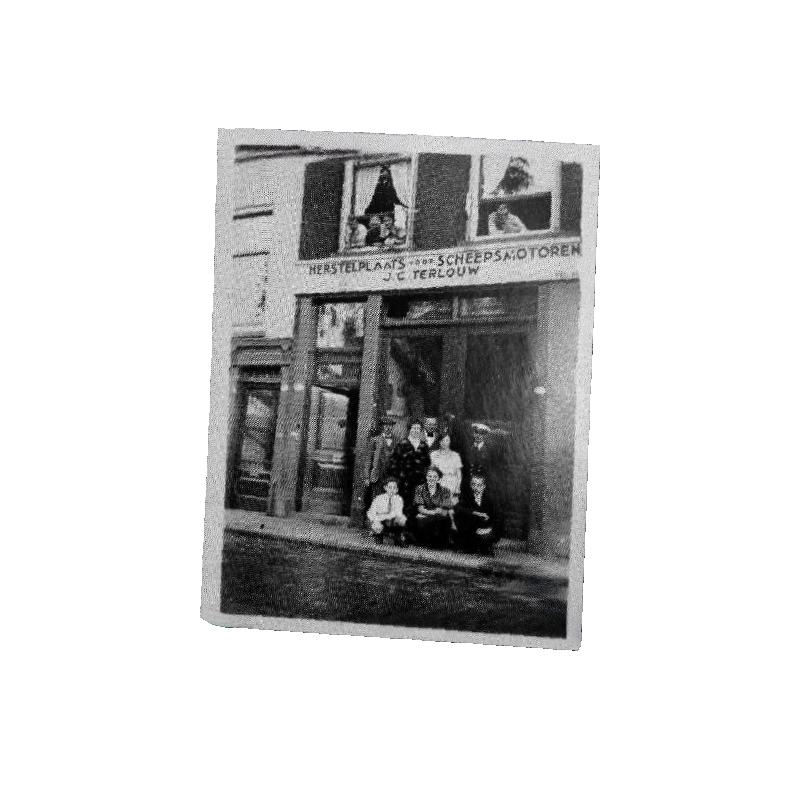
own engine repair workshop after fourteen years of experience. In 1924, he
founded the company in Pauwensteeg, Rotterdam, laying the foundations
for what would become Terlouw Rotterdam.
This was the era of hot-bulb engines, while diesel engine technology was
still in its early stages of development. It was also a period of rapid motorisation
within the maritime industry, where long hours and hard work were the norm
despite modest financial rewards. Despite these challenges, the repair workshop
continued to grow, building a strong reputation within the shipping industry.
As demand increased, the business expanded by leasing additional premises on
the corner of Nieuwe Haven. After removing the dividing wall between the two
buildings, a much larger workshop was created, providing the space needed for the
company’s continued growth.
1940-1945
On 14 May 1940, during the bombing of Rotterdam, almost the entire city centre
was destroyed, including the Terlouw workshop. Both the family home and the
business premises were lost. With great determination, Johannes Terlouw searched
through the rubble for any tools and equipment that could still be salvaged. Using
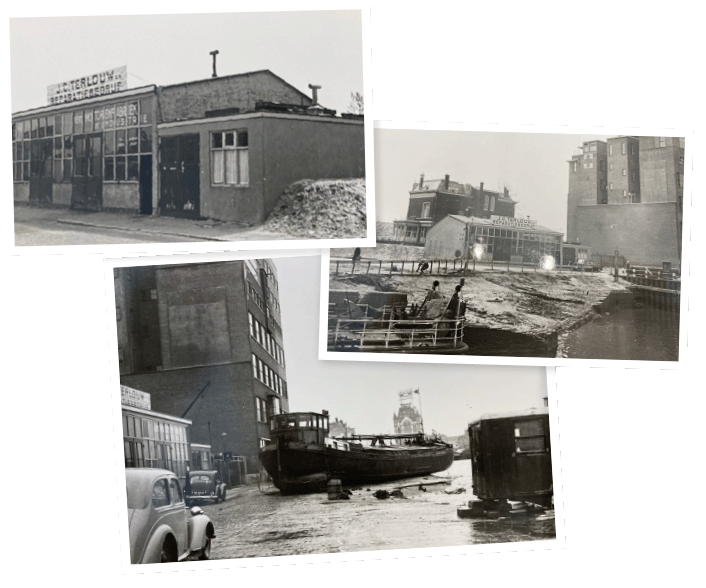
the few materials that remained, he restarted the business from a small garage on
Bosland, working under extremely difficult wartime conditions. In 1943, during the
Second World War, the company was able to move into a temporary building on
Haringvliet, on the corner where the former Harbour Hospital once stood. From this
location, Terlouw continued serving the maritime industry and rebuilding the business
despite the challenges of the time.
2nd Generation
and reconstruction
Over the years, J.C. Terlouw’s four sons (Bas (1914), Bertus (1919),
Arnold (1927), and Jan (1930)) grew up surrounded by the family
business. All four developed a strong interest in the company, with
each taking on their own role and responsibilities. During and after
the Second World War, Rotterdam’s city centre had to be rebuilt.
Large numbers of vessels transported rubble away from the city and
delivered construction materials for the reconstruction. This surge in
maritime activity created new opportunities, contributing significantly
to the continued growth of the business.
Flood disaster
In 1953, during the North Sea Flood, the company nearly went under
again due to the high water level. The customers almost came inside
with their ships! Fortunately, the company remained undamaged and
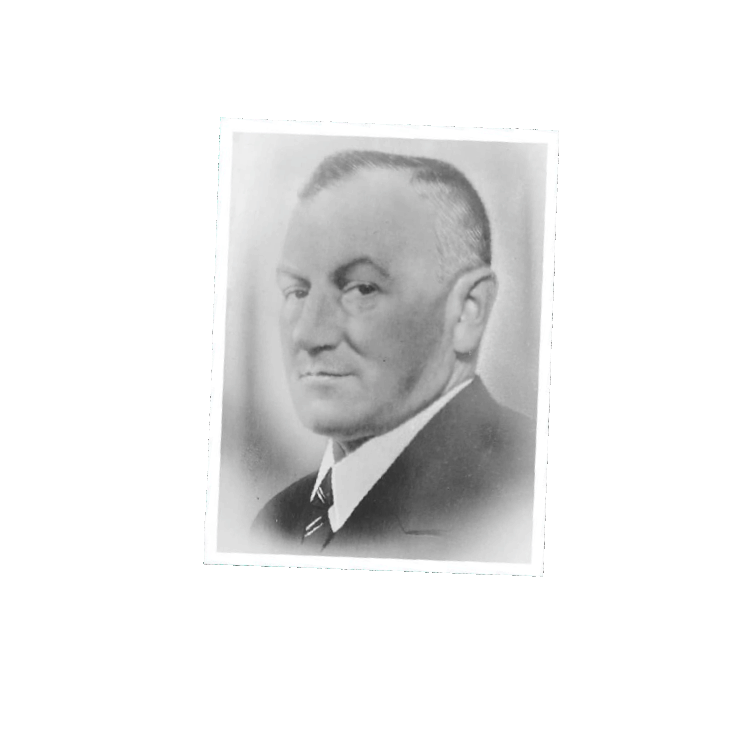
was able to continue its activities. This was also the year that founder
Mr. J.C. Terlouw passed away at the age of 63.
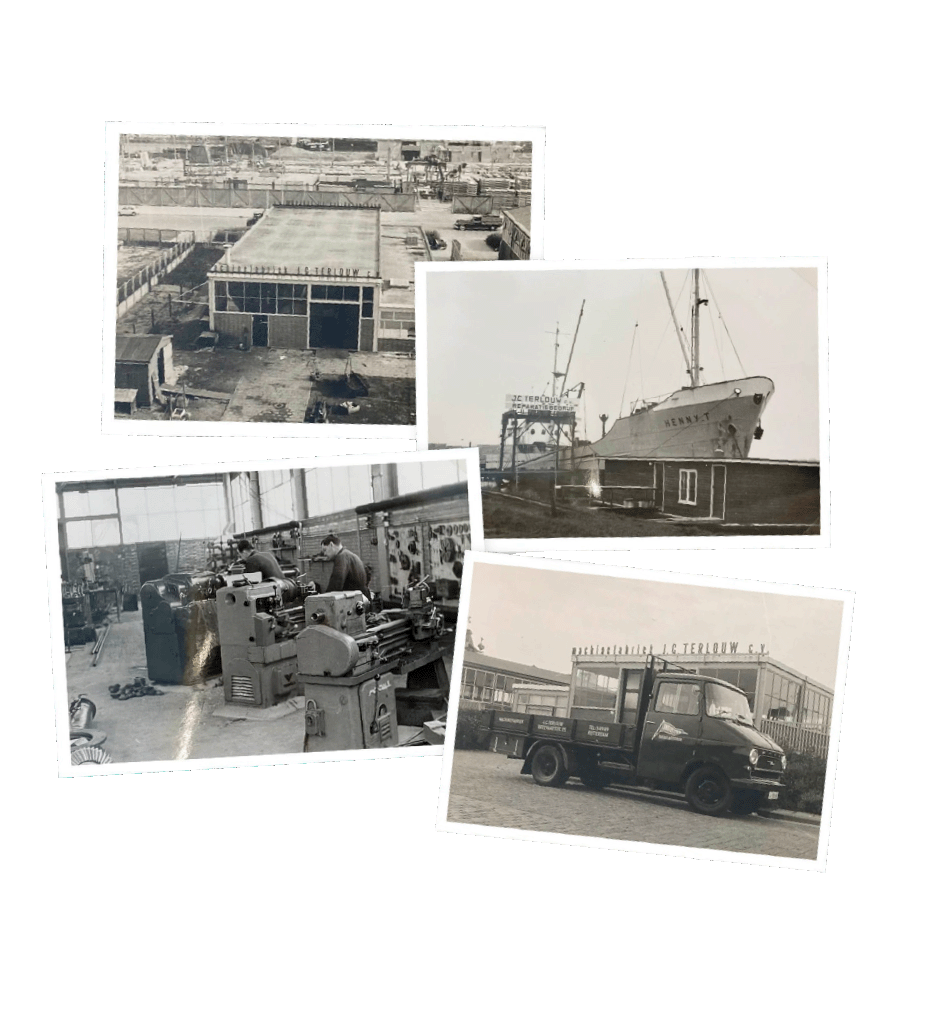
Opening of new business premises – 1957
By the mid-1950s, Rotterdam had a growing need for
a new harbour hospital. The planned site for the
hospital was located on the land occupied by the
temporary buildings on Haringvliet, making it necessary
for Terlouw to find a new home for the workshop.
At the same time, the City of Rotterdam was developing
a new industrial estate outside the city centre for heavy
industry. This area became the Spaanse Polder, now one
of Rotterdam’s best-known industrial districts. The four
Terlouw brothers decided to relocate the company to this
new industrial area, providing the space needed for further
growth and expansion. On 12 January 1957, the first foundation
pile was driven, and later that year, in the autumn of 1957,
Terlouw officially opened the doors of its new premises on
Breevaartstraat, alongside the Gantelhaven.
3rd Generation
The founder, who passed away in 1953, left his company to
his four sons: Bas, Bertus, Arnold, and Jan. The four brothers
continued the business as the 2nd generation. In the 1950s and 1960s,
much maintenance, overhauls, and installation work was carried
out on coasters, inland vessels, fishing vessels, and pumping stations.
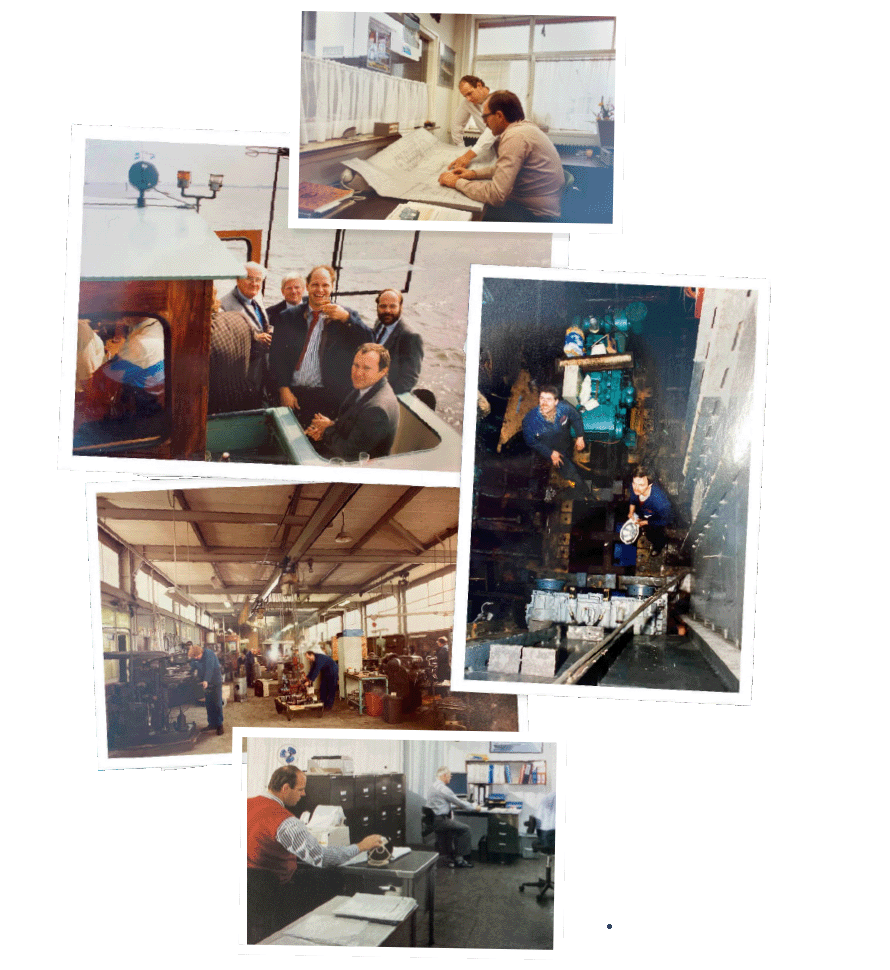
In the late 1970s, the 3rd generation gradually took over the helm,
because the 2nd generation was already of a respectable age and it was
time for rejuvenation and modern ideas within the company.
The 3rd generation became Jan Terlouw (son of Bas) and
Hans Terlouw (son of Arnold). In the 1970s, 1980s, and 1990s,
maintenance, survey, and overhaul work for the offshore, tanker shipping,
and maritime shipping companies was added. At that time, work was already
being carried out by our technicians worldwide.
Closing of factory ‘De Industrie’
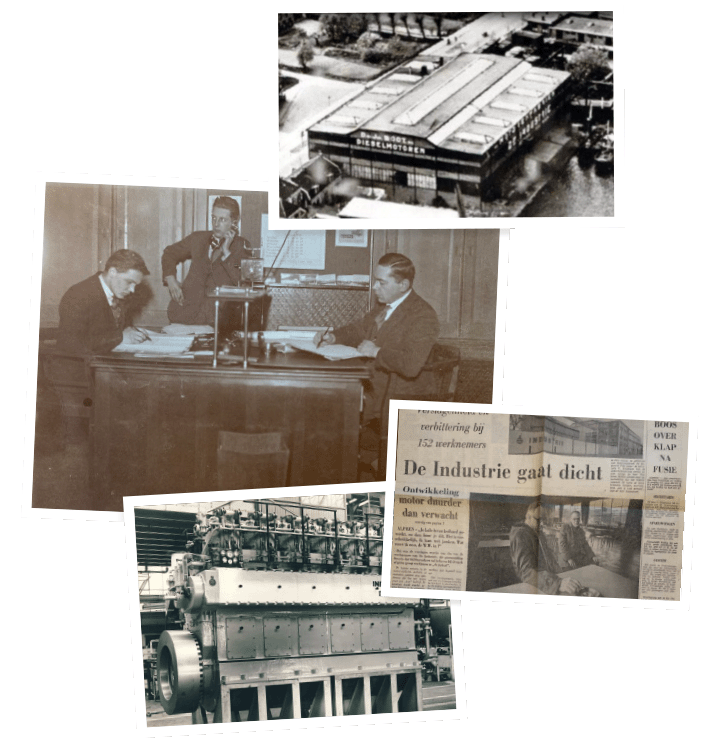
In 1977, the engine manufacturer “De Industrie”
in Alphen aan den Rijn ceased operations. With an
insufficient order book, the company had no alternative
but to file for bankruptcy. It is widely believed that the
rapid emergence of more modern, increasingly compact
diesel engines created intense competition that the
company could no longer withstand.
In an effort to secure its future, De Industrie had entered into
a partnership with ‘BRONS’ in Appingedam under the name
‘BRONS-INDUSTRIE’ to develop a new generation of TD engines.
Although a limited number of these engines were sold, the continued
development of the project came too late. The pace of technological
change and increasing market competition ultimately proved too
great for the company to overcome.
Under the national government led by Prime Minister Joop
den Uyl, a decision was ultimately made to safeguard employment
in the northern Netherlands. As part of this policy, the “DE INDUSTRIE”
engine factory in Alphen aan den Rijn was closed.
The “BRONSINDUSTRIE GROEP” continued developing the TD engine
programme for some time, despite increasingly challenging market conditions.
However, the project was ultimately unable to reverse the company’s fortunes.
Following the closure of the factory, spare parts support for De Industrie engines
continued, as did the operations of the company’s repair facility in IJmuiden,
until the early 1990s. By then, the “BRONS-INDUSTRIE GROEP” had also ceased
operations, marking the end of an important chapter in Dutch engine manufacturing.
Continuation of
‘De Industrie’
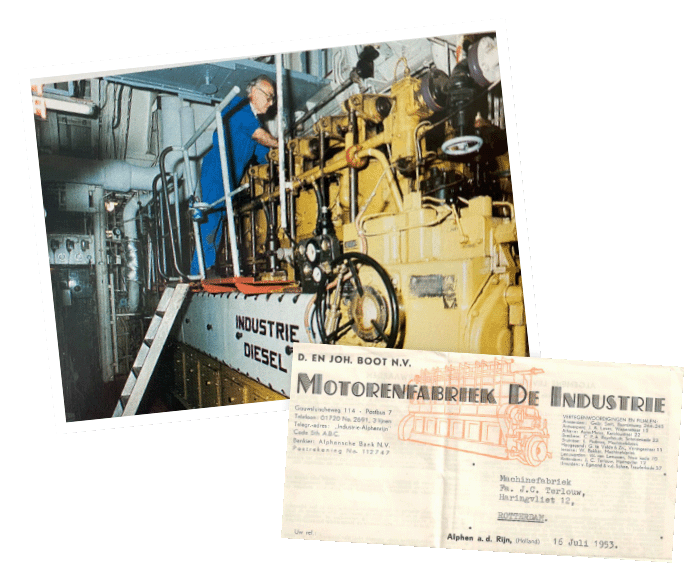
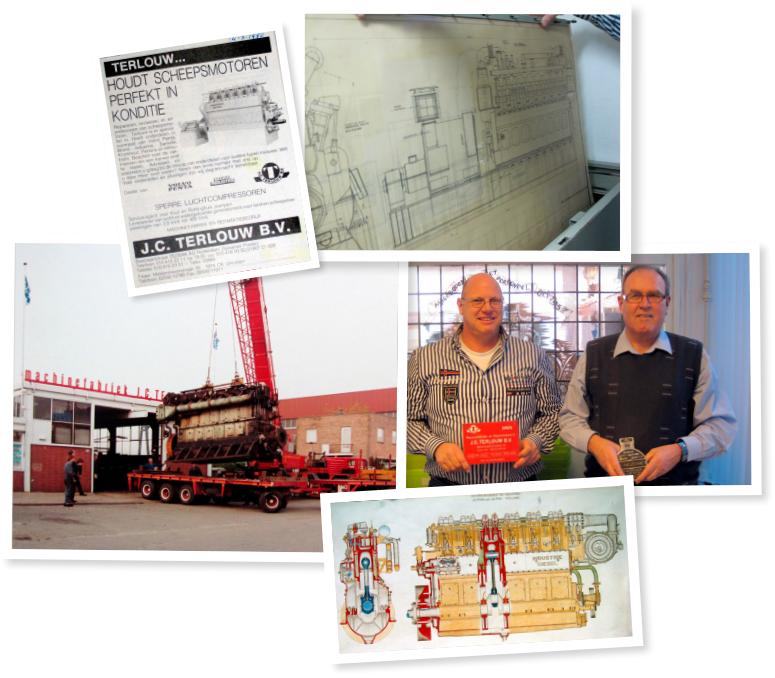
In 1989, the Brons-Industrie Groep (later Waukesha)
asked J.C. Terlouw B.V. to take over the Industrie service
facility in IJmuiden, located on Middenhavenstraat. Three
years later, in 1992, J.C. Terlouw B.V. also acquired all
engineering drawings, spare parts inventory, and service
obligations relating to ‘De Industrie’ engines. This ensured
that existing customers could continue to rely on expert
technical support, spare parts, and maintenance for many
decades to come.
50th anniversary
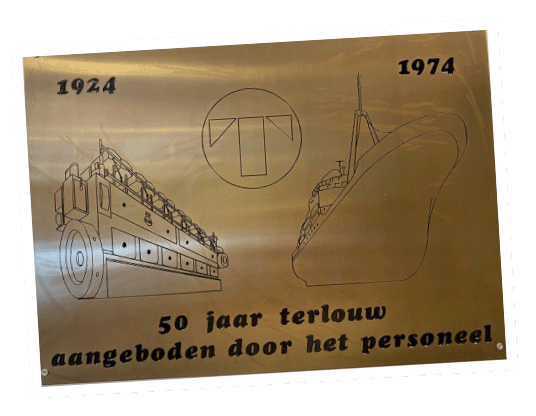
On the occasion of the 50th anniversary in 1974,
the management of the company received a beautiful
gift from the entire staff at the time.
Dealership Volvo Penta
During the 1970s, the commercial marine sector experienced
significant growth. At that time, Volvo Penta Ridderkerk focused
exclusively on the recreational boating market in the Benelux.
Recognising the increasing demand within commercial shipping,
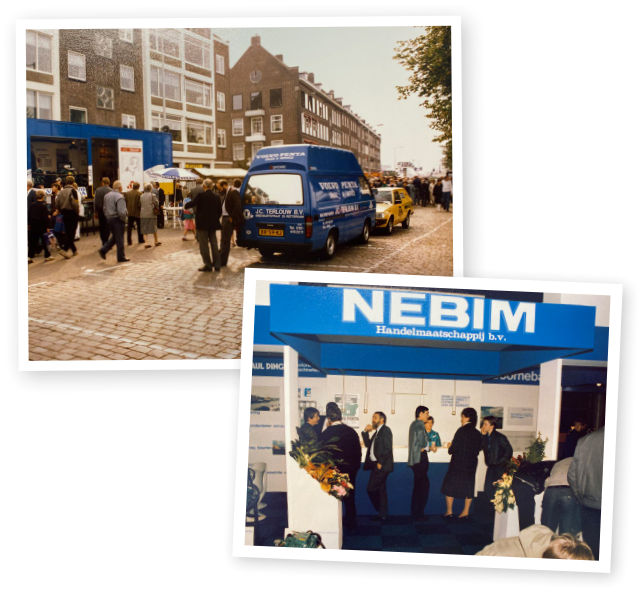
Volvo Penta appointed NEBIM Handelsmaatschappij B.V. to serve
the professional marine sector. Terlouw already maintained a close
working relationship with NEBIM. Many vessels powered by ‘De Industrie’
main engines were also equipped with Volvo Penta marine generator
sets supplied through NEBIM, creating a natural partnership
between the two companies. In 1979–1980, Terlouw was
invited to become an official NEBIM service partner, further
strengthening its position within the commercial marine market.
In later years, NEBIM Handelsmaatschappij in Mijdrecht
also took over Volvo Penta’s recreational marine activities,
after which the Volvo Penta branch in Ridderkerk was closed.
In the late 1990s, NEBIM Handelsmaatschappij was
acquired by Volvo Penta AB. Following the acquisition,
Volvo Penta established its official Benelux Market Unit
in Beesd, which continues to serve the region today.
By this time, the demand for servicing ‘De Industrie’ engines
had gradually declined following the closure of the factory.
At the same time, the Volvo Penta business continued to grow
steadily, successfully replacing this activity and becoming an
increasingly important part of Terlouw’s operations.
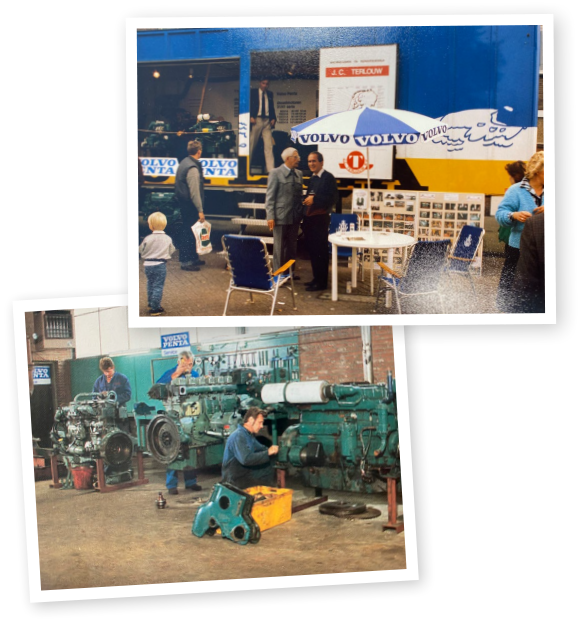
Earlier, in 1989, Terlouw’s second facility in the port of IJmuiden
had already been appointed as an official Volvo Penta Commercial
Marine Dealer, further strengthening the company’s position within
the professional marine sector.
Opening Seaport
Marina IJmuiden
As the company was already well established in the Port
of IJmuiden, serving the commercial marine sector, the
development of the new Seaport Marina IJmuiden presented
an opportunity to expand into the recreational boating market.
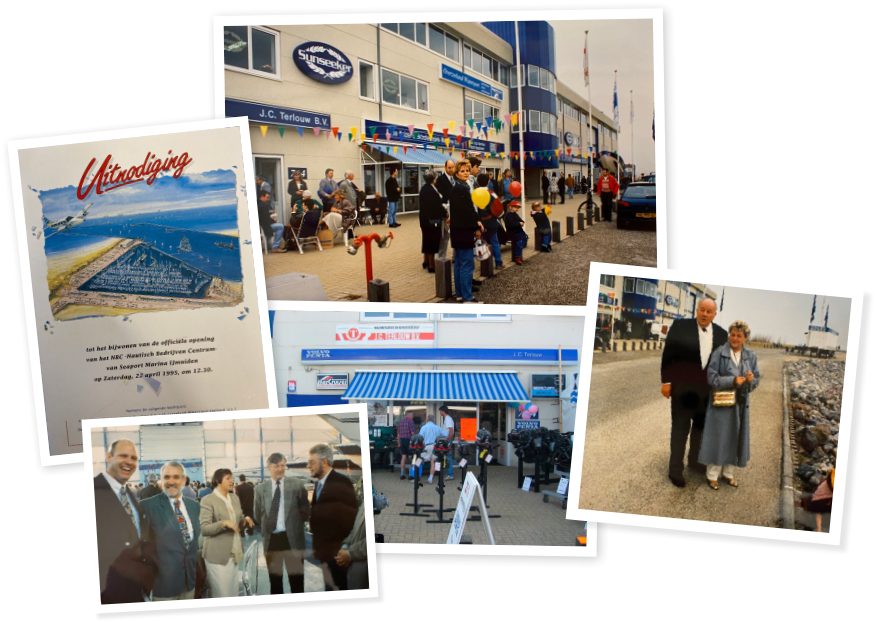
In 1994, when Seaport Marina officially opened, Terlouw also
opened a new retail shop and workshop at the marina. Representatives
from Volvo Penta attended the opening to celebrate the launch of the
new dealership, marking another important milestone in the long-standing
partnership between the two companies.
The industrial sector –
2000’s
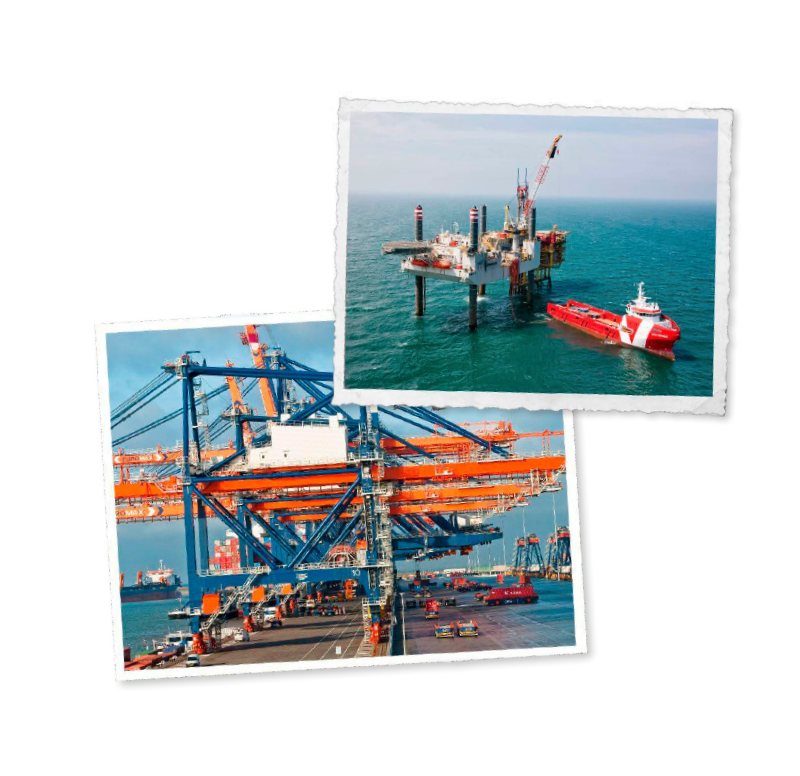
Our extensive experience with marine generator sets and
port equipment perfectly aligned with Volvo Penta’s
long-term ambitions. Following the turn of the century,
Volvo Penta launched a strategic growth programme to
expand its presence in the industrial market. Volvo Penta AB
experienced remarkable growth within the industrial sector,
and Terlouw grew alongside it. Our practical, no-nonsense approach
quickly earned the appreciation of customers throughout the
Port of Rotterdam, and soon far beyond.
85th Anniversary
Following the passing of J.C. Terlouw and A.C. Terlouw of the
second generation, the company decided not to celebrate its 75th
anniversary out of respect for the family and chose to forgo the planned
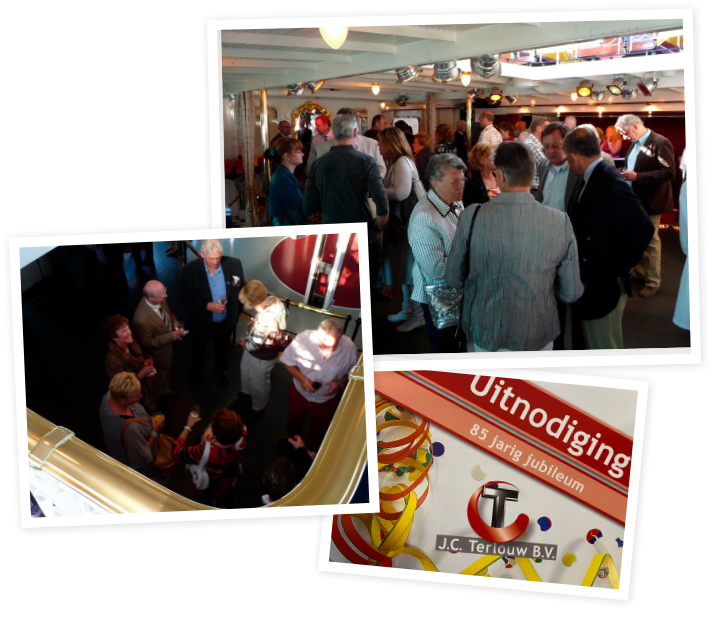
festivities. Ten years later, however, the company decided it was the right
moment to celebrate its history and organised a special event to mark its
85th anniversary.
During the evening, customers, partners, and business relations were introduced
to the fourth generation of the Terlouw family. Jacqueline Terlouw delivered the opening
speech, marking the beginning of a new chapter in the company’s long history.
Renewed Volvo Penta
dealer status
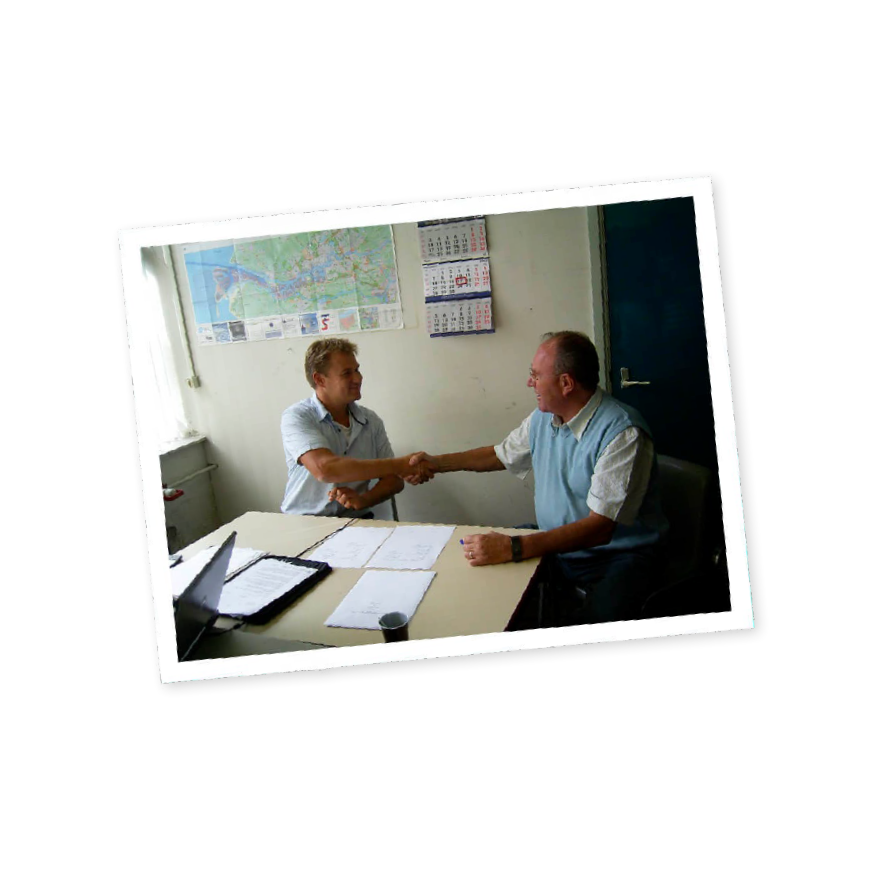
In 2009, Volvo Penta AB introduced a major restructuring of its
dealer network. The organisation adopted a decentralised model,
appointing a number of larger dealers across the Benelux as regional
Volvo Penta Centres. These Centres became the primary point of
contact for both customers and the wider network of Volvo Penta Service
Dealers. For Terlouw, this new status represented a significant milestone.
It brought greater responsibilities, a broader service area, and new opportunities
for growth. To meet the increasing expectations of both customers and Volvo Penta,
the company invested heavily in modernising and professionalising its organisation,
ensuring it was well equipped for the future.
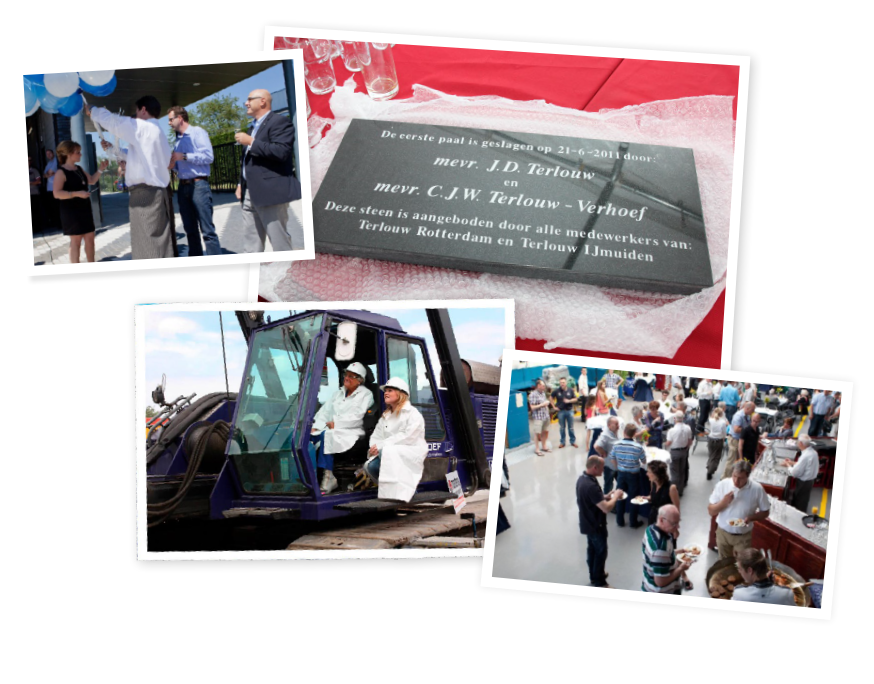
Opening of the new
business premises
Over the years, and partly thanks to its appointment as a Volvo
Penta Centre, Terlouw continued to grow and became an
increasingly important partner within the Volvo Penta dealer network.
The existing premises could no longer meet modern health and safety
regulations, while the expanding parts inventory and engine storage
capacity had outgrown the available space. To support future growth,
the company decided to build a new, purpose-designed facility. The new
premises officially opened in May 2012, providing the space and
infrastructure needed to continue serving customers at the highest level.
4th Generation 2013-2026
From 2013 onwards, Terlouw entered a period of significant
transformation. As markets evolved and customer expectations
changed, it became clear that investing in a new building alone
was not enough, the organisation itself also needed to evolve.
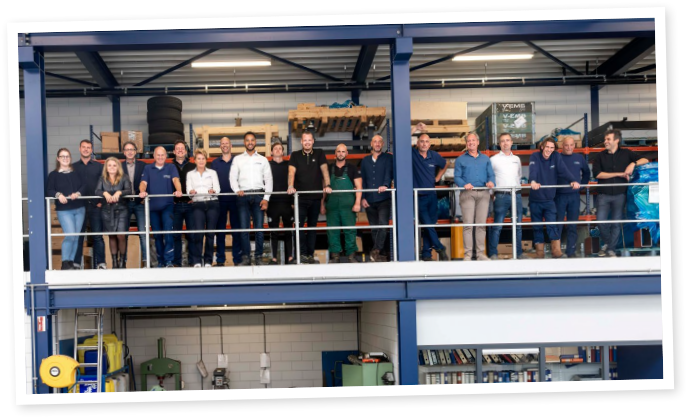
During this period, the fourth generation of the Terlouw family
took a leading role in modernising and professionalising the
business, preparing the company for the future. At the same time,
Volvo Penta introduced ambitious growth targets across its dealer network.
This resulted in a substantial increase in engine and parts sales, which in turn
drove expansion across Terlouw’s service, planning, and logistics operations.
To maintain the high level of quality and customer support the company is known for,
many new employees joined the team. Today, Terlouw continues to strengthen
its position as one of Volvo Penta’s leading dealers in the Benelux. Many of our
customers have been with us for decades, a loyalty we greatly value and never take for granted.
Throughout our history, we have remained true to the principles on which the company was
built: be honest, keep your word, and always deliver on your promises. These enduring
values have not only earned the trust of generations of customers but have also enabled
us to build lasting relationships with many new clients as we continue to grow.